As we reach the halfway point of 2026, it’s the perfect time to pause and evaluate your approach with your clients.
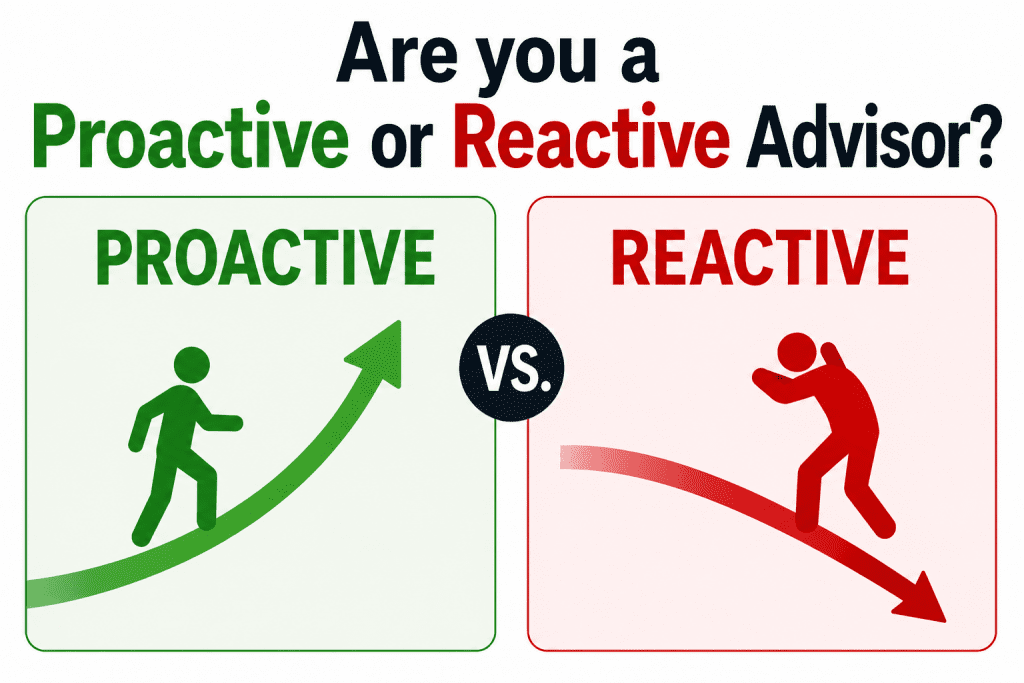
Are you being proactive or reactive?
With markets continuing to fluctuate, tax laws evolving, and headlines fueling uncertainty, one question deserves your attention:
Are you leading the conversation with your clients, or waiting for the phone to ring?
Proactive advisors:
- Reach out before clients become concerned
- Review tax-planning opportunities before year-end deadlines approach
- Rebalance portfolios with purpose, not emotion
- Provide clarity and confidence when others are creating noise
- Anticipate client needs before they become issues
Reactive advisors:
- Respond after market volatility creates anxiety
- Adjust after deadlines have passed
- Clarify after confusion has spread
- Manage emotions instead of setting expectations
- Create problems that could have been prevented
Markets will always move. Tax laws will continue to change. Economic uncertainty will never completely disappear.
What separates exceptional advisors from average ones is not their ability to react—it’s their commitment to staying ahead of the conversation.
The second half of 2026 is already presenting meaningful opportunities for tax planning, wealth preservation, and strategic client communication. The advisors who understand these opportunities will be the ones who engage early and communicate often.
Don’t wait for the perfect time to act—perfect timing rarely exists.
Instead, ask yourself:
Am I anticipating what my clients need next, or reacting to what has already happened?
Remember, consistent communication creates both comfort and opportunity. When clients hear from you first, they gain confidence in their plan and confidence in you.